

Introduction
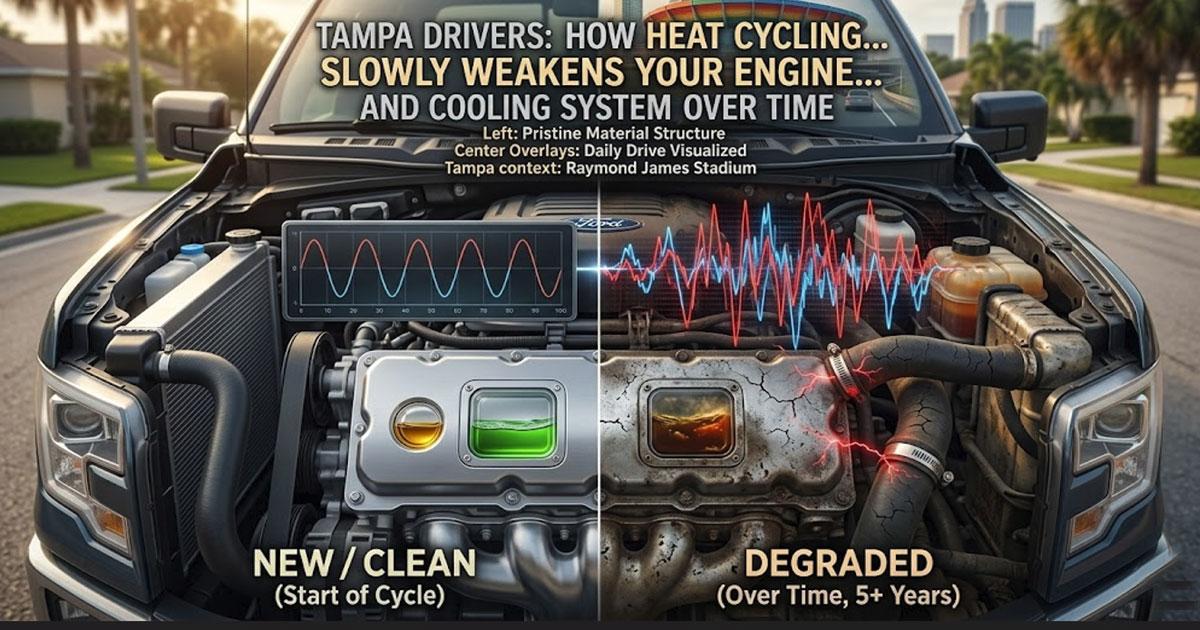
In Tampa, most drivers expect heat to be hard on their vehicles — but what many don’t realize is that it’s not just the high temperatures that cause wear. It’s the constant cycling between heat and cooling during everyday driving.
At Lou’s Total Car Care in Tampa, we see how this repeated expansion and contraction quietly affects engines, cooling systems, and long-term vehicle reliability. It doesn’t cause sudden failure — it builds stress over time until parts start to struggle.
What Heat Cycling Actually Means
Every time you start your car, drive in traffic, park, and let it cool down, your vehicle goes through a heat cycle.
During this process:
- Engine components expand as they heat up
- Fluids thin out and circulate under pressure
- Rubber and plastic components flex under temperature change
- Metal parts repeatedly expand and contract
Individually, each cycle is normal. But over thousands of Tampa driving days, that repetition adds up.
Why Tampa Driving Makes It Worse
Tampa creates a perfect environment for accelerated heat cycling damage due to a combination of factors:
- High daily temperatures for most of the year
- Heavy stop-and-go traffic that increases idle heat
- Short trips where the engine never fully stabilizes
- Frequent A/C use, adding load to the engine system
Instead of long, steady driving cycles, most vehicles in Tampa experience constant heat fluctuation throughout the day.
The Cooling System Takes the Biggest Hit
Your cooling system is designed to manage temperature extremes, but heat cycling puts constant pressure on its components.
Over time, this can lead to:
- Radiator wear and reduced efficiency
- Weakening hoses and connection points
- Thermostat strain and inconsistent temperature regulation
- Water pump fatigue from constant workload
- Gradual coolant breakdown and reduced protection
These issues often develop slowly and are easy to miss until performance drops noticeably.
Engine Stress You Don’t See
While the cooling system handles temperature regulation, the engine itself is also under continuous stress from heat cycling.
Common long-term effects include:
- Expansion stress on seals and gaskets
- Increased wear on internal engine components
- Oil thinning and reduced lubrication efficiency at peak heat
- Small efficiency losses that build over time
This type of wear doesn’t usually show immediate symptoms, which is why it often goes unnoticed.
Signs Heat Cycling May Be Affecting Your Vehicle
Drivers in Tampa may begin to notice subtle changes such as:
- Temperature gauge fluctuating more than usual
- Cooling fans running more frequently
- Slight coolant loss over time
- Reduced A/C performance during idle
- Engine feeling “heavier” in stop-and-go traffic
These signs don’t always point to a major failure, but they often indicate system stress building up.
Why Preventative Maintenance Matters More in Tampa
Because heat cycling is gradual, the best protection is consistent preventative maintenance rather than reactive repairs.
At Lou’s Total Car Care, key services that help reduce heat-related wear include:
- Cooling system inspections and pressure tests
- Coolant flushes and fluid condition checks
- Hose and belt inspections for heat damage
- Thermostat and radiator performance evaluations
- Engine diagnostics to detect early stress patterns
Catching small issues early helps prevent expensive breakdowns later.
Closing Thoughts
Tampa driving doesn’t just expose your vehicle to heat — it exposes it to constant heat change. That repeated cycling is one of the most overlooked sources of long-term engine and cooling system wear.
By understanding how this process works, drivers can stay ahead of problems instead of reacting to them after damage has already started.
At Lou’s Total Car Care in Tampa, our focus is keeping vehicles stable, efficient, and reliable in a climate that never really gives them a break.