
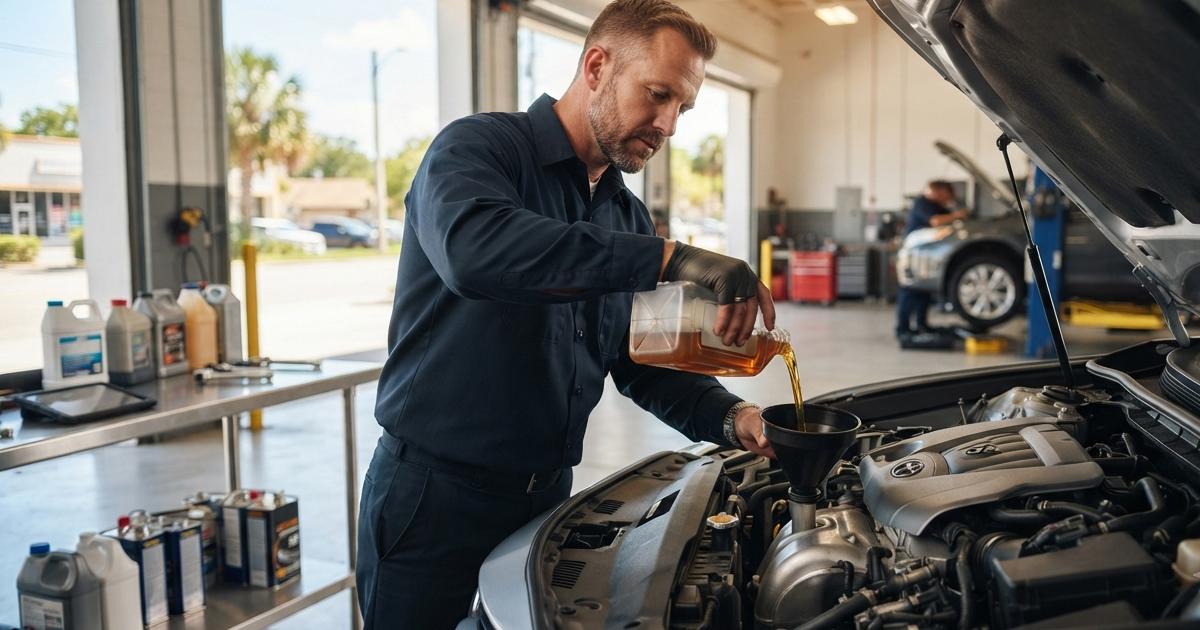

Your vehicle is a complex machine made up of thousands of moving parts, and nearly every critical system depends on some type of fluid to function properly. From your engine to your brakes, your transmission to your power steering, fluids are the lifeblood of your car. Yet for many drivers, fluid maintenance is the most overlooked aspect of vehicle care — until something goes wrong.
At Lou's Total Car Care in Tampa, we see the consequences of neglected fluids on a regular basis. The good news is that most fluid-related problems are entirely preventable with routine checks and timely changes. Here is what every Tampa driver needs to know about keeping those fluids in check.
Why Fluid Maintenance Matters More in Florida
Florida's climate creates conditions that are uniquely hard on vehicle fluids. The intense heat that Tampa experiences throughout most of the year accelerates fluid breakdown, causes faster evaporation, and promotes the kind of oxidation that turns clean fluid into a dark, sludgy mess that does more harm than good.
Add to that the high humidity, frequent short trips through stop-and-go traffic, and occasional flooding from heavy rains, and you have a recipe for fluid degradation that happens much faster than the national averages automakers base their service intervals on. In short, if you live and drive in Tampa, you need to be more attentive to your fluids than drivers in cooler, drier climates.
Heat Breaks Down Fluid Faster Than You Think
Motor oil, transmission fluid, coolant, and brake fluid all have one thing in common — they lose their effectiveness when exposed to sustained high temperatures. The chemical compounds that give these fluids their protective properties begin to break down, leaving your vehicle's systems working harder with less protection. This is why regular checks are not just a recommendation in Florida. They are a necessity.
The Essential Fluids Your Vehicle Depends On
Understanding what each fluid does helps you appreciate why staying on top of them matters. Here is a breakdown of the key fluids in your vehicle and what you should know about each one.
Engine Oil
Engine oil lubricates the hundreds of moving parts inside your engine, reduces friction, carries heat away from critical components, and helps keep the engine clean by suspending contaminants. Over time, oil breaks down and becomes contaminated with combustion byproducts, metal particles, and moisture. Dirty, old oil cannot do its job effectively and can lead to accelerated engine wear or, in severe cases, catastrophic engine failure.
In Tampa's heat, oil degrades faster than in cooler climates. Most modern vehicles using conventional oil should have it changed every 3,000 to 5,000 miles under Florida driving conditions. Synthetic oil can last longer, typically 7,500 to 10,000 miles, but that does not mean you should skip inspections in between changes.
Coolant
Coolant, also called antifreeze, regulates your engine's temperature by absorbing heat and releasing it through the radiator. In Florida, your cooling system is working overtime for the majority of the year. Coolant does not just prevent overheating — it also protects against corrosion inside your engine and radiator.
Over time, coolant loses its effectiveness and becomes acidic, which can actually start eating away at the components it is supposed to protect. A coolant flush every 30,000 miles or as recommended by your manufacturer is a smart investment that prevents costly cooling system damage.
Transmission Fluid
Transmission fluid lubricates the gears and internal components of your transmission, helps with heat dissipation, and keeps the system shifting smoothly. In automatic transmissions, it also serves as a hydraulic fluid. When transmission fluid becomes dirty or runs low, your transmission has to work harder, which generates more heat and leads to accelerated wear.
Transmission repairs are among the most expensive jobs in automotive repair, often costing thousands of dollars. Regular fluid checks and changes are one of the most cost-effective ways to avoid that kind of bill.
Brake Fluid
Brake fluid transfers the force from your brake pedal to your brake calipers, allowing your vehicle to stop. It operates under extreme pressure and temperature, and it is hygroscopic, meaning it absorbs moisture from the air over time. As brake fluid absorbs moisture, its boiling point drops, which can lead to reduced braking performance — a serious safety concern.
Many drivers never think about brake fluid until there is a problem. Having it checked regularly and flushed every two years or so is a simple step that keeps your braking system performing reliably.
Power Steering Fluid
Power steering fluid keeps your steering system operating smoothly and responsively. Low or dirty power steering fluid can cause stiff, unresponsive steering, whining noises when turning, and eventually damage to the power steering pump. Many newer vehicles use electric power steering and do not require this fluid, but if your vehicle has a hydraulic system, it should be checked regularly.
Windshield Washer Fluid
While it may not affect your engine, windshield washer fluid is a safety item that is easy to neglect. Florida's bug season and frequent rain mean your wipers and washer system see a lot of use. Keeping this reservoir full ensures you always have clear visibility when you need it most.
Signs That a Fluid May Need Attention
Your vehicle will often give you warning signs when a fluid is low, dirty, or leaking. Knowing what to look for can help you catch problems early before they turn into expensive repairs.
- Dark, thick, or gritty oil on the dipstick indicates it is time for a change and possibly a flush.
- A sweet smell from under the hood is a common sign of a coolant leak or overheating issue.
- Difficulty shifting or slipping gears often points to low or degraded transmission fluid.
- A spongy or soft brake pedal can indicate air in the brake lines or contaminated brake fluid.
- Whining or groaning when turning the steering wheel may signal low or failing power steering fluid.
- Puddles under your parked vehicle are a clear sign of a fluid leak that needs immediate attention.
- Dashboard warning lights including oil pressure and temperature warnings are urgent signals to check your fluids right away.
Do Not Wait for a Warning Light
By the time a warning light comes on, the situation may already be at a critical point. Proactive fluid checks during routine maintenance visits are far better than reactive repairs after something has already failed. At Lou's Total Car Care, every service visit includes a visual inspection of key fluids so you always know where things stand.
Let Lou's Total Car Care Keep Your Fluids in Check
At Lou's Total Car Care, located at 8317 Rustic Dr A in Tampa, our experienced technicians take fluid maintenance seriously because we know how much it matters to the long-term health of your vehicle. Whether you are coming in for an oil change, a full inspection, or any other service, we make sure you leave knowing exactly what your vehicle needs and what can wait.
We serve drivers throughout Tampa and the surrounding area with honest assessments, fair pricing, and the kind of personal attention you simply do not get at a chain shop. Our family-owned approach means we treat your vehicle the way we would treat our own.
Do not let neglected fluids put your vehicle — or your safety — at risk. Give us a call at (813) 885-5687 or stop by today to schedule your next fluid check or maintenance service. A few minutes of preventative care now can save you hundreds or even thousands of dollars down the road.