
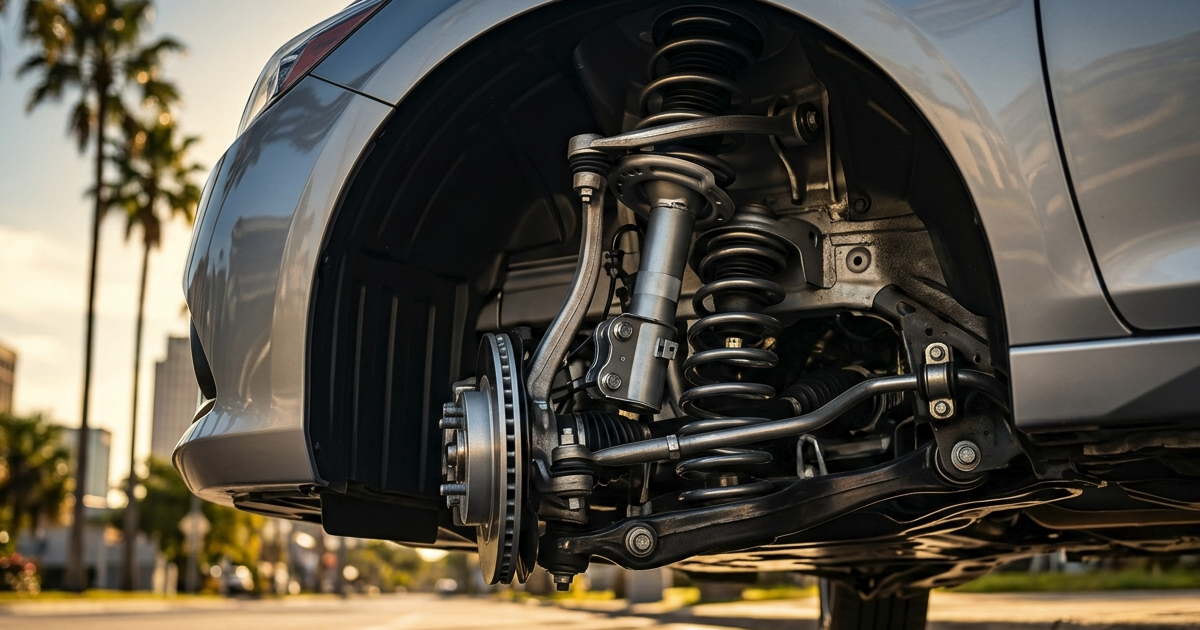

Your vehicle's suspension system is one of those things most drivers don't think about until something feels seriously wrong. But by the time you're bouncing down the road or struggling to keep your car in a straight line, the damage may already be significant. For Tampa drivers who deal with everything from pothole-riddled roads to highway speeds on I-275, keeping your suspension in good shape isn't just about comfort — it's about safety.
At Lou's Total Car Care, we inspect and repair suspension systems on every make and model. Our team knows how Florida's road conditions, heat, and humidity can take a toll on these critical components. Here's what you need to know to catch suspension problems before they become expensive — or dangerous.
What Does Your Suspension System Actually Do?
Before diving into warning signs, it helps to understand what the suspension system is responsible for. Simply put, it connects your vehicle to its wheels and allows relative motion between the two. It absorbs shocks from the road surface, keeps your tires in proper contact with the pavement, and helps you maintain control during turns, stops, and acceleration.
The suspension system includes components like shocks, struts, control arms, ball joints, tie rods, sway bars, and springs. Each one plays a specific role, and when any of them starts to fail, you'll likely feel it — often in more ways than one.
Why Tampa Roads Are Especially Hard on Suspension
Tampa's roads present a unique challenge. Between construction zones, uneven pavement, road debris, and the occasional flooding that leaves potholes in its wake, your suspension takes a beating that drivers in smoother-road states simply don't experience. Add in the extreme heat that accelerates rubber component degradation and the humidity that contributes to corrosion, and it's clear why suspension issues are so common among Tampa-area vehicles.
Warning Signs Your Suspension Needs Attention
The good news is that your vehicle usually gives you clear signals when something is wrong with the suspension. Knowing what to look — and listen — for can help you catch problems early and avoid more costly repairs down the road.
Your Ride Feels Rough or Bouncy
One of the most obvious signs of suspension trouble is a rough, bouncy, or uncomfortable ride. If you feel every bump, crack, and dip in the road much more than you used to, your shocks or struts are likely worn out. A quick test is to push down on the hood of your parked vehicle and release it — if the car bounces more than once or twice before settling, your shocks are probably due for replacement.
Your Car Pulls to One Side
If your vehicle drifts or pulls to one side while you're driving straight, the problem could be related to your suspension, alignment, or both. Worn control arms, damaged tie rods, or uneven spring compression can all cause this issue. Ignoring a pull isn't just annoying — it puts extra stress on your tires and makes your vehicle harder to control in emergency situations.
You Hear Clunking, Knocking, or Squeaking Noises
Strange noises coming from underneath your vehicle — especially when going over bumps, turning, or braking — are a strong indicator that something in your suspension needs attention. Clunking sounds often point to worn ball joints or loose components. Squeaking can indicate dry bushings or worn struts. These noises shouldn't be dismissed as normal; they're your car asking for help.
Your Steering Feels Loose or Unresponsive
If your steering wheel feels vague, loose, or takes more effort than usual, the culprit could be worn tie rods, a failing power steering system, or damaged suspension components. Any change in how your steering responds is worth having inspected immediately, as these issues directly affect your ability to control the vehicle.
Uneven Tire Wear
Take a look at your tires. If you notice that the tread is wearing unevenly — more on one side than the other, or in unusual patterns — your suspension may be to blame. Faulty alignment caused by bad suspension components puts uneven pressure on your tires, causing them to wear down faster in specific areas. This not only shortens tire life but also reduces road grip.
Your Vehicle Nose-Dives When Braking
When you apply the brakes, does the front of your car dip forward noticeably? This is called nose-diving, and it's a common symptom of worn-out shocks or struts. It means your vehicle isn't properly managing weight transfer during braking, which can significantly increase your stopping distance — a serious safety concern.
Common Suspension Components That Wear Out Over Time
Understanding which parts are most likely to need attention can help you have more informed conversations with your mechanic and know what to expect during an inspection.
- Shocks and Struts: These are the most commonly replaced suspension components. They wear out gradually, which is why drivers often don't notice the decline until it's significant. Most manufacturers recommend inspection around 50,000 miles, though Tampa driving conditions can accelerate wear.
- Ball Joints: These allow the wheels to move smoothly while the vehicle is in motion. Worn ball joints can cause clunking noises, loose steering, and in severe cases, wheel separation — which is as dangerous as it sounds.
- Tie Rods: These connect your steering system to the wheels. When they wear out, you'll notice poor steering responsiveness and uneven tire wear.
- Control Arms and Bushings: Control arms connect the suspension to the vehicle frame, and bushings cushion the connection points. Worn bushings are often the source of that annoying clunking sound over bumps.
- Sway Bar Links: These help stabilize the vehicle during turns. Failed sway bar links often produce a rattling or knocking sound, especially around corners.
- Springs: Coil or leaf springs support the vehicle's weight. A broken spring is a serious problem that can cause the vehicle to sit unevenly and handle very poorly.
What to Do If You Notice These Signs
If any of these warning signs sound familiar, the best step you can take is to schedule an inspection with a trusted mechanic as soon as possible. Suspension problems rarely fix themselves, and delaying repairs almost always leads to additional damage — including accelerated tire wear, alignment issues, and strain on steering components.
At Lou's Total Car Care in Tampa, our experienced technicians perform thorough suspension inspections and explain exactly what they find before any work begins. We believe in honest assessments and fair pricing, and we'll never recommend repairs that aren't genuinely needed. Whether it's a simple bushing replacement or a full strut overhaul, we handle it all with the care and attention your vehicle deserves.
Don't Wait Until It Affects Your Safety
The suspension system is one of the most safety-critical parts of your vehicle. A compromised suspension doesn't just make for an uncomfortable ride — it affects your ability to steer, brake, and maintain control in emergency situations. On Tampa's busy roads and highways, that's not a risk worth taking.
If your vehicle is showing any of the signs mentioned above, give us a call at (813) 885-5687 or stop by our shop at 8317 Rustic Dr A, Tampa, FL 33634. We're here to help you drive safely and confidently, no matter what the road ahead looks like.