
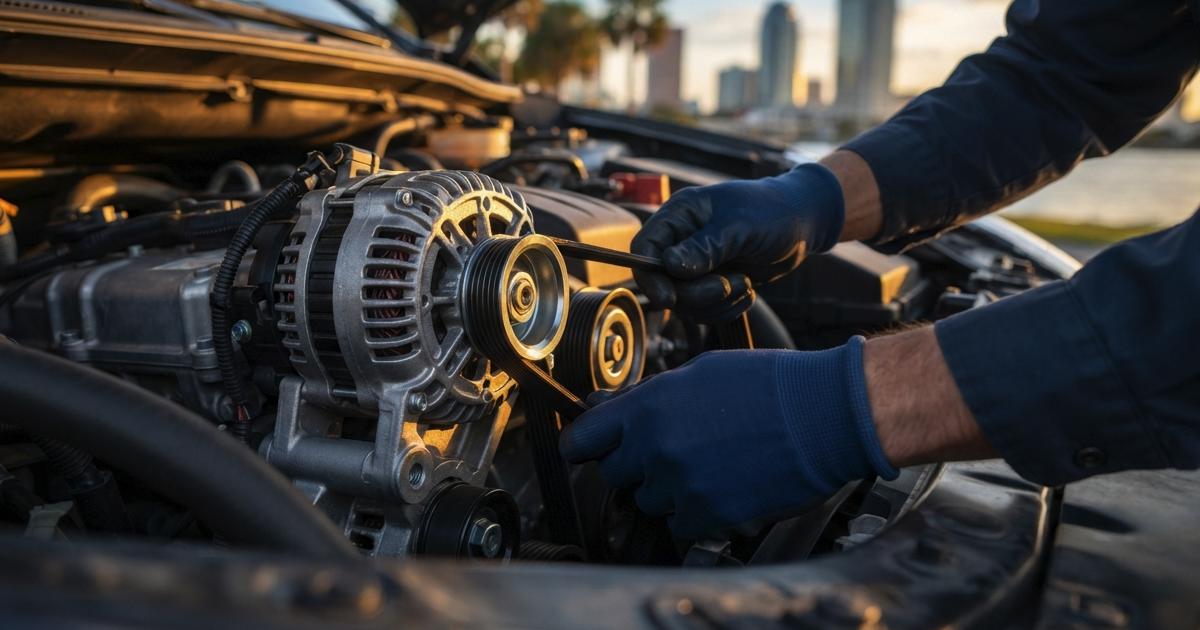

Your vehicle's alternator is one of those components that most drivers never think about — until it fails. The alternator is responsible for keeping your battery charged while your engine is running and powering all of the electrical systems in your car, truck, or SUV. When it starts to fail, it can trigger a cascade of problems that leave you stranded at the worst possible time. In Tampa's demanding climate, where heat and stop-and-go traffic already put enormous stress on your vehicle, a failing alternator can deteriorate faster than you might expect. Knowing the warning signs early can save you from a frustrating breakdown and a much larger repair bill.
What Does the Alternator Actually Do?
Before diving into the warning signs, it helps to understand exactly what your alternator does. Think of it as your vehicle's personal power generator. While your battery provides the initial burst of electricity needed to start your engine, the alternator takes over from there — continuously generating electrical current to power your lights, radio, air conditioning, power windows, and every other electrical component in your vehicle. It also keeps your battery topped off so it's ready for the next start.
When the alternator begins to fail, your vehicle starts drawing power directly from the battery to compensate. Since the battery is not designed for continuous discharge, it drains rapidly, and your vehicle can shut down completely, sometimes with very little warning. In Tampa's extreme heat, this process accelerates because both the battery and the alternator are already working harder than they would in cooler climates.
Common Warning Signs That Your Alternator Is Failing
Alternators rarely fail all at once. They typically give you warning signs over time. The key is knowing what to look for so you can get to a trusted shop like Lou's Total Car Care before the problem leaves you stranded on the side of the road.
The Battery Warning Light Comes On
One of the most common early indicators of alternator trouble is a battery-shaped warning light appearing on your dashboard. Many drivers assume this light only relates to the battery itself, but in most modern vehicles, it actually monitors the entire charging system — including the alternator. If this light flickers or stays on while you're driving, your charging system deserves a professional inspection right away.
Dimming or Flickering Lights
Your alternator powers your headlights, interior lights, and dashboard lights. If you notice your headlights dimming at idle and brightening when you accelerate, or if interior lights flicker unpredictably, these are strong signs that your alternator is struggling to maintain a steady electrical output. In Tampa, where night driving and heavy rain are common, diminished headlights are not just inconvenient — they're a safety hazard.
Electrical Components Acting Strangely
Modern vehicles rely on alternator power to run everything from power windows and seat adjusters to your infotainment system and air conditioning compressor. When the alternator begins to fail, you may notice these components behaving sluggishly or erratically. Power windows might move slower than usual, your radio might reset itself, or your air conditioning might underperform even when it has been recently serviced.
Strange Noises Coming from the Engine Bay
A failing alternator often produces audible symptoms. Listen for a grinding, whining, or growling noise coming from beneath the hood. These sounds can indicate worn bearings inside the alternator or a slipping serpentine belt that drives the alternator. If you hear unusual engine noises, it's always worth having them checked out promptly rather than waiting to see if they go away.
Frequent Dead Batteries or Difficulty Starting
If you find yourself jump-starting your vehicle frequently, or if your car is slow to crank when you turn the key, your alternator may be failing to keep the battery adequately charged. Many drivers replace their battery in this situation only to find the new battery dying again within days. The real culprit in many of these cases is a faulty alternator that is no longer doing its job. A proper charging system diagnostic will identify the real source of the problem.
The Smell of Burning Rubber or Electrical Odors
A burning smell, particularly one that resembles rubber or hot wiring, can indicate that the alternator's internal wiring is overheating or that the serpentine belt is slipping against the alternator pulley. These symptoms should never be ignored. Electrical fires are rare but possible, and any burning smell under the hood warrants an immediate inspection.
Why Tampa Drivers Face Higher Alternator Risk
Tampa's climate creates conditions that are particularly hard on alternators and the charging systems they support. There are several reasons why local drivers should be especially attentive to the signs of alternator trouble.
- Extreme heat: High temperatures accelerate the wear on alternator components, including the internal bearings and voltage regulator. Under Tampa's summer sun, under-hood temperatures can reach levels that significantly shorten an alternator's lifespan.
- Constant air conditioning use: In Tampa, air conditioning is not a seasonal luxury — it's a year-round necessity. Running your AC full-time places a heavy continuous load on your alternator, causing it to work harder and wear out sooner than it might in cooler climates.
- Stop-and-go traffic: Tampa's notoriously congested roads mean your alternator cycles between low-speed and higher-speed charging repeatedly throughout every commute. This inconsistent load can stress the alternator's voltage regulator over time.
- Short trips: Frequent short drives mean your alternator never gets a sustained opportunity to fully recharge your battery, placing extra strain on both components.
- Humidity and corrosion: Tampa's coastal humidity can accelerate corrosion on electrical connectors and wiring associated with the alternator and charging system, leading to resistance and reduced efficiency.
What to Do If You Suspect Your Alternator Is Failing
If you've noticed any of the warning signs above, the most important thing you can do is have your vehicle inspected by a qualified technician before the alternator fails completely. At Lou's Total Car Care in Tampa, our team performs comprehensive charging system diagnostics to determine whether your alternator, battery, or related components are the source of the problem. We check the output voltage of your alternator, inspect the serpentine belt and tensioner, test your battery's health, and examine electrical connections for signs of corrosion or damage.
Catching a failing alternator early means the difference between a planned, affordable repair and an unexpected roadside breakdown. Alternator replacement is a straightforward job when addressed on your schedule, but when the alternator fails completely, it often takes other components with it — including the battery — which can significantly increase your total repair cost.
Don't Wait Until You're Stranded
One of the most common things we hear from customers is that they noticed something off with their electrical system a week or two before they ended up stranded in a parking lot or on the side of the road. Your vehicle almost always tells you something is wrong before it gives out entirely. The key is listening to those signals and acting on them promptly.
At Lou's Total Car Care, located at 8317 Rustic Dr A in Tampa, we make it easy to get the answers you need with honest diagnostics, fair pricing, and fast turnaround times. Whether you're dealing with a flickering dashboard light, a sluggish start, or a battery that keeps dying, our experienced technicians will get to the root of the problem and get you back on the road with confidence. Give us a call at (813) 885-5687 to schedule your inspection today — because a small fix now is always better than a big breakdown later.