

Your brakes are the single most important safety system on your vehicle. No matter how powerful your engine is or how smoothly your transmission shifts, none of it matters if you cannot stop reliably. For Tampa drivers navigating busy intersections, highway on-ramps, and unpredictable traffic patterns, healthy brakes are not optional — they are essential. The problem is that brake wear happens gradually, and many drivers do not recognize the warning signs until something serious has already gone wrong.
At Lou's Total Car Care, we inspect and service brakes on every make and model, and we hear the same thing from customers time and time again: they had a feeling something was off but kept putting it off. This guide is designed to help you recognize the signs early, understand what is happening mechanically, and know when it is time to bring your vehicle in before a small brake issue becomes a dangerous and expensive one.
How Your Brake System Actually Works
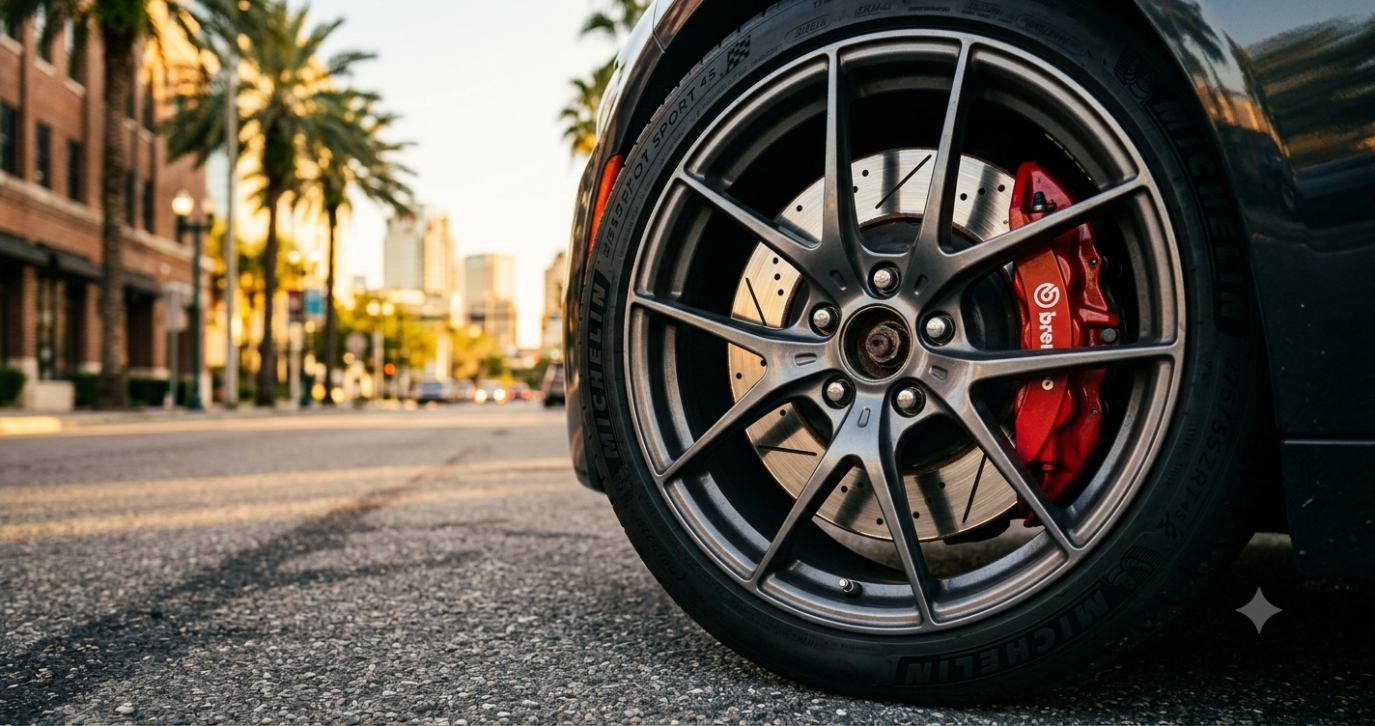
Before diving into the warning signs, it helps to understand the basics of how your brakes function. Most modern vehicles use a disc brake system on at least the front wheels, and many use disc brakes on all four. When you press the brake pedal, hydraulic pressure forces brake calipers to squeeze brake pads against spinning rotors. This friction slows your vehicle down. Over time, the brake pads wear thin, the rotors can become warped or scored, and the hydraulic components can degrade.
Drum brakes, still found on the rear wheels of some vehicles, work slightly differently but follow the same general principle — friction material wears down over time and needs to be replaced. Understanding this helps explain why so many of the warning signs you will experience are related to friction, heat, and metal-to-metal contact.
The Most Common Warning Signs That Your Brakes Need Attention
Squealing or Squeaking Sounds When Stopping
One of the earliest and most recognizable signs of brake wear is a high-pitched squealing sound when you apply the brakes. This is not random — it is intentional. Brake pads are manufactured with small metal wear indicators built into them. When the pad material wears down to a certain point, these indicators make contact with the rotor and produce that distinctive squeal. Think of it as your vehicle telling you that it is time to schedule a brake inspection.
It is worth noting that some light squealing first thing in the morning after a vehicle has sat overnight is considered normal, especially in Florida's humid climate where surface rust can briefly form on the rotors. If that sound disappears after your first few stops, it is usually not a concern. But if the squealing is consistent every time you brake, it needs to be checked.
Grinding Noise When You Apply the Brakes
If squealing goes unaddressed and brake pads wear completely down, the next sound you will hear is a harsh grinding or growling noise. This is the sound of metal grinding against metal — specifically the brake caliper or pad backing plate making direct contact with the rotor. At this point, you are no longer just dealing with worn pads. The rotor itself is likely being damaged, which turns a straightforward pad replacement into a more involved and more costly repair.
Grinding sounds should be treated as an urgent warning. If you are hearing this, do not delay getting your vehicle to a shop. Driving on metal-to-metal brakes significantly reduces your stopping power and puts you and others at risk.
Vibration or Pulsing in the Brake Pedal
If your brake pedal vibrates, pulses, or feels like it is shuddering when you press it, that is typically a sign of warped rotors. Rotors can warp due to excessive heat, sudden cooling like driving through a puddle immediately after heavy braking, or simply from uneven wear over time. When a rotor is no longer perfectly flat and smooth, you feel that unevenness through the pedal and sometimes even through the steering wheel during braking.
Warped rotors can often be resurfaced if caught early enough. If they are too thin or too damaged, replacement is the safer option. Either way, a pulsing pedal is a sign that something is mechanically off and needs professional attention.
The Vehicle Pulls to One Side While Braking
When you press the brakes and your vehicle drifts or pulls noticeably to the left or right, it usually indicates uneven brake wear or a stuck caliper. One side of your brake system may be applying more force than the other, causing that pulling sensation. This can also be related to a collapsed brake hose that is restricting fluid flow to one caliper.
Pulling while braking is not just uncomfortable — it can make emergency stops genuinely dangerous. If your vehicle pulls consistently when you apply the brakes, bring it in for an inspection right away.
A Soft, Spongy, or Low Brake Pedal
A brake pedal that feels soft, spongy, or sinks closer to the floor than normal is a red flag that something is wrong with your braking hydraulics. This can be caused by air in the brake lines, a brake fluid leak, or a failing master cylinder. Any of these scenarios reduces the hydraulic pressure needed to properly engage your brakes.
If your pedal feels noticeably different than it normally does — especially if it feels like it goes all the way to the floor before engaging — pull over safely and contact a shop immediately. This is one of the most serious brake symptoms and should not be driven on.
The Brake Warning Light Comes On
Most modern vehicles have a brake warning light on the dashboard. If this light illuminates, it could mean several things: your brake fluid is low, your parking brake is engaged, or there is a fault detected within the brake system. Never assume it is a sensor malfunction and ignore it. Have it checked as soon as possible so you know exactly what your vehicle is trying to tell you.
Additional Signs That Are Easy to Overlook
Burning Smell After Heavy Braking
If you smell something sharp and chemical-like after driving down a steep incline or using your brakes heavily in traffic, that could be overheated brakes. This typically happens when brakes are applied continuously for extended periods, causing the pads to overheat. While occasional heat is normal, a persistent burning smell suggests the system may not be releasing properly or that the brake components are worn to the point where they are working too hard.
Longer Stopping Distances
Sometimes brake wear does not announce itself with dramatic sounds. Instead, you simply notice that your vehicle does not stop as quickly as it used to. If you find yourself pressing the pedal harder or earlier than you used to in order to stop in time, your braking performance has degraded. This is known as brake fade and it is a serious safety concern that warrants an immediate inspection.
What to Expect at Lou's Total Car Care
When you bring your vehicle to Lou's Total Car Care for a brake inspection, our team takes a thorough look at every component of your brake system. We check pad thickness, rotor condition, caliper function, brake fluid level and quality, and brake lines. We explain exactly what we find and what we recommend, without pressure and without unnecessary upsells.
- Visual inspection of all four brake assemblies
- Measurement of brake pad thickness
- Rotor inspection for warping, scoring, and minimum thickness
- Caliper inspection for sticking or uneven wear
- Brake fluid condition check and flush if needed
- Test drive to verify braking performance before and after service
We service every make and model at our Tampa shop, and we are proud to offer honest assessments and fair pricing on all brake work. Whether you need a simple pad replacement or a full brake system overhaul, our team handles it with the same level of care and craftsmanship we bring to every job.
Do Not Wait Until Something Goes Wrong
Brakes are one of those systems that can seem perfectly fine right up until they are not. The gradual nature of brake wear means that most drivers are unaware of how much stopping power they have already lost. Routine inspections are the best way to stay ahead of the problem, and in Florida's stop-and-go driving environment, brakes wear faster than many people expect.
If you have noticed any of the warning signs mentioned above — or if it has simply been a while since your last brake inspection — stop by or call Lou's Total Car Care at (813) 885-5687. We are located at 8317 Rustic Dr A, Tampa, FL 33634, and we are here to make sure you and your passengers stay safe every time you hit the road.